


Backyard Sport Courts in DFW: The Complete Guide to Basketball, Pickleball & Multi-Sport Slabs
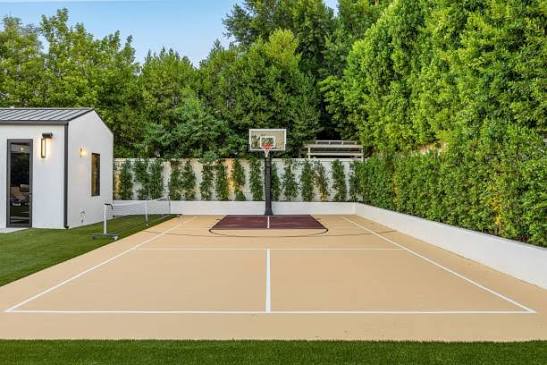
Backyard sport courts have become one of the most in-demand home improvements across the Dallas-Fort Worth area — and for good reason. A properly built concrete sport court gives your family a dedicated space to practice, compete, and connect every single day. In Fort Worth, Keller, Southlake, Colleyville, and across the DFW Metroplex, homeowners with the right lot size are turning underused backyard space into one of the most-used features of their property.
But a sport court is only as good as the concrete beneath it. Every basketball court, every pickleball court, every multi-sport setup in North Texas starts with a concrete slab — and in DFW's expansive clay soil and triple-digit summer heat, that slab has to be engineered and poured specifically for local conditions. A surface court on a poorly built slab will develop cracks, uneven spots, and drainage problems faster than almost any other concrete application, because large exposed slabs amplify the effects of soil movement and heat cycling.
This guide gives DFW homeowners the complete picture on backyard sport courts — court types, dimensions, concrete foundation requirements, surface options, full project costs, and what to know before you start planning.
Why Backyard Sport Courts Are Booming in DFW
Several factors have combined to make backyard sport court installations one of the fastest-growing project categories in the Dallas-Fort Worth area:
Pickleball has gone mainstream. Pickleball is the fastest-growing sport in the United States — and nowhere is that more visible than in Texas. The sport's accessibility across age groups, its relatively compact court size compared to tennis, and its social nature have made it enormously popular across DFW communities. Homeowners who played at local parks and recreation centers are now building their own courts to play whenever they want.
Basketball demand is evergreen. For families with kids in youth athletics or high school programs, a home basketball court means more practice time, more skill development, and a reason for the neighborhood to gather. Half-court basketball setups have been a popular backyard upgrade for decades in DFW, and demand remains consistently strong.
DFW lot sizes support it. Keller, Southlake, Colleyville, and many Fort Worth neighborhoods feature lots large enough to accommodate a full pickleball court or half-court basketball setup without overwhelming the backyard. In communities where half-acre and larger lots are common, sport courts are a genuinely achievable upgrade.
Outdoor living culture. North Texas's climate — with comfortable weather from October through May and usable evenings even in summer — means a backyard sport court gets used year-round in ways it wouldn't in more northern climates.
Court Types and Dimensions for DFW Homeowners
Understanding the standard dimensions for each court type helps with backyard planning before you talk to a contractor.
Half-Court BasketballThe most popular sport court type in DFW residential backyards. A regulation half-court is 47 feet wide by 50 feet deep — but residential half courts are frequently built at custom dimensions based on available backyard space. A functional basketball half-court can work in as little as 30 feet by 35 feet, though the full regulation size provides a more authentic playing experience.
The concrete slab footprint for a half-court basketball setup at regulation size is approximately 2,350 square feet — a significant pour that demands proper engineering for DFW clay soil.
Key features of a basketball court slab:
- Flat, level surface with minimal slope for drainage (1/8 inch per foot is the standard)
- Smooth or lightly textured finish for ball bounce consistency
- Court lines painted or taped after surface coating is applied
- Hoop system anchored into the slab perimeter or mounted on a post beside the court
Pickleball CourtA regulation pickleball court measures 20 feet wide by 44 feet long for the playing surface. The recommended total slab footprint — including out-of-bounds space on all sides — is 30 feet wide by 60 feet deep, or 1,800 square feet.
The pickleball court concrete slab requires:
- Precise flatness — surface irregularities greater than 1/8 inch over 10 feet affect play quality significantly
- A sealed, acrylic-coated surface for consistent ball bounce
- Court lines applied to the surface coating in contrasting colors
- Net post anchors cast into the slab during the pour
Full-Court BasketballA regulation full-court measures 94 feet by 50 feet — nearly 4,700 square feet of concrete. Most residential applications in DFW build at smaller custom dimensions when a full court is desired, typically 84 feet by 50 feet or smaller depending on available space. Full courts are most common on larger lots in Southlake, Colleyville, and rural North Texas properties where acreage is available.
Multi-Sport CourtThe most versatile option — a single slab with court lines for two or more sports painted in contrasting colors. Basketball and pickleball is the most popular combination in DFW, where the two sports share a broadly similar court scale and appeal to different household members. Volleyball lines are also commonly added to multi-sport setups.
A basketball half-court and a pickleball court can share a combined slab footprint of approximately 50 feet by 60 feet — around 3,000 square feet — with lines for both sports clearly delineated in different colors on the surface coating.
The Concrete Foundation: Why It Determines Everything
Every sport court in DFW starts with a concrete slab — and the quality of that slab determines the court's performance, safety, and longevity more than any surface coating, line marking, or equipment.
Why large sport court slabs are especially demanding in North Texas:
A sport court slab is larger than most residential concrete projects — and that large footprint amplifies the effects of DFW's soil conditions. The expansive clay beneath every lot in Fort Worth, Keller, and Southlake moves with every rainfall and every drought cycle. A smaller slab may crack in isolated spots that are manageable. A 2,000 to 4,000 square foot slab on improperly prepared ground develops uneven sections, drainage problems, and surface cracking that directly affect playability and safety.
What a quality sport court foundation in DFW requires:
Excavation to stable subgrade. The top layer of clay soil is the most reactive. Excavating down to stable subgrade and building up from there with a compacted gravel base creates the drainage buffer and stability that keeps the slab level over time.
Compacted gravel base of 4 to 6 inches. The gravel base provides drainage — preventing water from pooling beneath the slab and amplifying soil swelling — and a stable, uniform platform for the concrete.
Full rebar grid throughout. Wire mesh alone is not sufficient for a sport court slab in DFW. A full rebar grid — #4 rebar on 18-inch centers or as specified by the contractor — holds the slab together as a unified structure through soil movement events.
Control joints placed for the large footprint. Control joint placement on a sport court slab is more complex than for a standard residential pour. Joints need to be positioned to avoid interfering with the playing surface while still managing concrete movement correctly. This requires planning before the pour — not cuts made without thought after the fact.
Precise grading for drainage. A sport court needs to be as close to flat as possible for playability, while still shedding water. A slope of 1/8 inch per foot — just barely perceptible underfoot — in a single consistent direction is the standard for sport court drainage in DFW.
Hot-weather curing management. Sport court slabs poured in DFW summer conditions need curing compound applied immediately after finishing and 28 days of curing time before surface coating is applied. Applying court surface coating to a slab that hasn't fully cured leads to adhesion failure and premature surface delamination.
Sport Court Surface Options
Once the concrete slab is properly cured, the surface coating brings the court to life.
Acrylic Sport Surface CoatingThe industry standard for outdoor sport courts in North Texas. Acrylic coatings are applied in multiple layers — typically a resurfacer base coat followed by 2 to 3 color coats — and provide the consistent, cushioned playing surface that makes pickleball and basketball play properly. Acrylic coatings come in a wide range of colors and can be customized with logos, school colors, or decorative elements.
The color combination is functional as well as aesthetic — lighter colors reflect more heat from the court surface, keeping it more comfortable in DFW summer conditions when bare concrete or dark coatings can reach extreme temperatures.
Modular Sports TilesInterlocking polypropylene tile systems are sometimes used over concrete instead of poured-on coatings. Tiles provide cushioning and can be replaced individually if damaged. They're more expensive than acrylic and add maintenance complexity, but some homeowners prefer the feel and the flexibility.
Painted Lines Without CoatingSome homeowners opt for a sealed concrete surface with only painted lines — no full sport coating. This is a lower-cost option that works adequately for casual play but doesn't provide the ball bounce consistency and surface texture that acrylic coatings offer for serious play.
Sport Court Project Costs in DFW (2025)
Sport court pricing in the DFW area reflects the size of the slab, the surface coating choice, and what add-ons are included.
Concrete slab foundation only:
- $8 to $14 per square foot for a properly reinforced, drainage-graded sport court slab in DFW
All-in sport court cost estimates (slab + surface coating + lines + equipment):
- Residential pickleball court: $25,000 to $45,000
- Half-court basketball with hoop: $22,000 to $40,000
- Multi-sport court (basketball + pickleball): $35,000 to $65,000+
- Premium builds with lighting, fencing, and seating: $50,000 to $100,000+
What drives cost up:
- Larger footprint
- Premium surface coating systems
- Perimeter fencing and windscreens
- Sports lighting for evening play
- Custom logos, colors, or decorative elements
- Challenging site conditions requiring more excavation
6 Tips for DFW Homeowners Planning a Backyard Sport Court
1. Start with a site assessment before finalizing dimensions. Tree locations, utility lines, drainage patterns, and setback requirements all affect where and how large a court can be placed on your specific lot. A qualified contractor will assess these factors before recommending final dimensions.
2. Build for the whole family, not just one sport. Multi-sport setups almost always deliver better long-term value than single-sport courts in DFW backyards. Consider who in your household will use the court and plan for all of them — basketball for the kids, pickleball for adults — on the same slab.
3. Check HOA requirements before designing anything. Many communities in Keller, Southlake, and Colleyville have HOA guidelines governing sport court installations — including setback requirements, fencing height limits, lighting restrictions, and sometimes color palettes. Confirm HOA requirements before any design decisions are finalized.
4. Plan for lighting if you want evening use. DFW summers make afternoon play uncomfortable — evening court sessions when the temperature drops are often when courts get the most use. Sports lighting planned during the original installation is far less disruptive and expensive than adding it after the court is complete.
5. Book in fall for the best installation conditions. October and November are the optimal months for sport court concrete pours in DFW — ideal curing temperatures, low storm risk, and stable soil moisture. Summer installs are viable with proper curing management but require more care.
6. Wait the full 28 days before surface coating. This is critical. Applying court surface coating before the concrete has fully cured leads to adhesion failure and premature surface delamination. The 28-day wait is not a suggestion — it's what protects the entire investment.
CBD Concrete: Backyard Sport Courts Across DFW
CBD Concrete is a locally owned, family-operated concrete contractor serving Fort Worth, Keller, Southlake, Colleyville, and the greater Dallas-Fort Worth Metroplex. Owner Dane and his in-house crew build sport court concrete foundations engineered specifically for North Texas clay soil — with proper excavation, gravel base, full rebar grid, precision grading, and hot-weather curing protocols on every project.
Every sport court slab CBD Concrete pours is built as a long-term investment — the foundation that makes the court perform properly from the first day of play and holds up through decades of DFW weather cycles. No subcontractors on critical stages. No shortcuts on the base work.

Ready to build a backyard sport court in Fort Worth, Keller, Southlake, Colleyville, or anywhere in the DFW Metroplex? Start with the concrete. CBD Concrete offers free, detailed quotes and will assess your backyard layout and soil conditions before recommending anything.
Get Your Free Sport Court Quote → cbdconcrete.com/contact


.svg)
.svg)