


Commercial Concrete Parking Lots in DFW: The Business Owner's Complete Guide
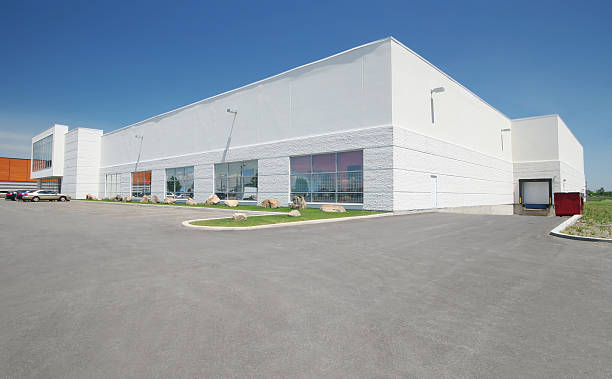
For any business, retail center, office complex, or commercial property in the Dallas-Fort Worth area, the parking lot is more than just a place for customers and employees to leave their vehicles. It's the first physical impression of your business. It affects accessibility and ADA compliance. It creates or eliminates liability. And in the long run, it either performs reliably for 30 to 40 years — or it becomes a recurring line item in your maintenance budget that never goes away.
The DFW commercial real estate market is one of the most active in the United States. Fort Worth, Keller, Southlake, Colleyville, and the surrounding Metroplex continue to attract business investment, retail development, and commercial construction at a pace that consistently outpaces most of the country. In that environment, commercial parking lot decisions matter — and the choice between concrete and asphalt, the quality of the installation, and the contractor you choose will be felt for decades.
This guide is the complete resource for DFW business owners, property managers, and commercial developers considering a new concrete parking lot, a lot replacement, or a commercial slab project of any kind.
The Business Case for Concrete in DFW Commercial Parking Lots
The choice between concrete and asphalt for a commercial parking lot is a legitimate business decision — not just a materials question. In the North Texas climate specifically, that decision has a clear answer for most commercial applications.
Concrete outlasts asphalt by a decade or more in DFW.A properly installed concrete commercial parking lot in Fort Worth or surrounding DFW communities has a service life of 30 to 40 years with minimal maintenance. A comparable asphalt lot typically requires resurfacing every 15 to 20 years and ongoing maintenance — sealcoating every 3 to 5 years, crack filling, pothole patching — throughout its shorter lifespan. For a commercial property owner thinking about 20-year or 30-year holding periods, the total cost of ownership calculation strongly favors concrete.
DFW's heat destroys asphalt faster than most markets.The business case for concrete is especially compelling in North Texas. Asphalt is petroleum-based and softens in extreme heat — and DFW regularly sees sustained temperatures above 100°F for weeks at a time. Asphalt parking lots in the Fort Worth area develop ruts, deformation, and tracking under slow-moving vehicles in ways that are particularly visible in commercial applications where heavy delivery vehicles, service trucks, and high-traffic lanes amplify the problem. Concrete doesn't soften. It maintains full structural integrity through the most demanding DFW summers.
Concrete handles heavy commercial loads better.If your commercial property sees delivery trucks, semi-trailers, trash compactors, or any vehicle heavier than a standard passenger car on a regular basis, concrete's rigidity and superior load distribution are decisive advantages over asphalt. Asphalt deflects under repeated heavy loading, accelerating surface wear in exactly the high-traffic zones where you need the most durability. Concrete spreads load across a wider bearing area, performing consistently over time even under commercial vehicle loads that would rapidly deteriorate an asphalt surface.
Concrete reduces ongoing maintenance costs.For commercial property owners and managers, the lower maintenance demands of concrete translate directly into reduced operational expense over the asset's life. No sealcoating cycles. No annual crack-filling campaigns. No emergency pothole patches before opening. Concrete requires periodic joint sealing and occasional localized repairs — but the frequency and cost are significantly lower than asphalt maintenance programs.
Concrete reflects heat and improves the customer experience.Asphalt's dark surface absorbs solar radiation and radiates heat back at ground level — making DFW parking lots feel significantly hotter than the ambient air temperature in summer. For retail, restaurant, and hospitality operations where customer comfort in the parking lot affects the overall experience, a lighter concrete surface that reflects rather than absorbs heat is a genuine quality-of-life difference in the Texas summer.
How Commercial Concrete Parking Lots Are Designed and Built in DFW
Commercial parking lot construction is a more complex engineering challenge than residential concrete work. Here's what a properly designed and built commercial concrete lot in North Texas involves.
Site Engineering and Layout DesignBefore any concrete work begins, the parking lot layout must be engineered for traffic flow, space efficiency, drainage, and ADA compliance. Key design considerations include:
- Traffic flow: The lot layout should allow efficient ingress, egress, and internal circulation without dangerous crossing patterns or dead-end configurations.
- Parking space dimensions: Standard parking spaces in Texas are 9 feet wide by 18 to 20 feet deep, with drive aisles of 24 feet minimum for two-way traffic and 18 to 20 feet for one-way.
- ADA-compliant accessible spaces: Federal ADA standards require a specific ratio of accessible spaces based on total lot capacity, with specific dimensions, access aisle widths, and signage requirements.
- Drainage: Commercial lots must manage stormwater according to local municipality requirements — directing runoff to designated drains or retention areas rather than allowing it to sheet off into adjacent properties or rights-of-way.
Slab Thickness and Reinforcement for Commercial ApplicationsCommercial concrete parking lots require heavier construction than residential driveways. In DFW:
- Standard passenger vehicle parking lot: 5 to 6 inch concrete slab, reinforced with #4 rebar
- Mixed passenger and light commercial vehicle traffic: 6 to 7 inch slab
- Heavy commercial vehicles, delivery trucks, semi-trailer access: 7 to 10 inch slab with heavier reinforcement
- Loading docks, trash compactor pads, fire truck access lanes: 8 to 12 inches with engineered reinforcement
The specific thickness and reinforcement schedule should be determined by a structural engineer based on the anticipated loads, soil conditions at the site, and drainage requirements.
Subgrade Preparation in DFW Clay SoilCommercial parking lots in the DFW area require more robust subgrade preparation than residential projects — because the consequences of subgrade failure under heavy commercial traffic are more expensive and more disruptive to business operations.
Standard commercial subgrade preparation in North Texas includes:
- Stripping unstable topsoil across the entire lot footprint
- Lime stabilization of the top 6 to 8 inches of reactive clay — reducing plasticity and improving bearing capacity
- Compacting the stabilized subgrade to 95% of standard Proctor density
- Installing a compacted crushed limestone base of 6 to 8 inches
- Fine grading to establish drainage slopes before forming
The lime stabilization step is particularly important for commercial lots in DFW. It directly reduces the magnitude of the clay soil's swelling and contraction under the lot, protecting the slab from the soil movement forces that are the primary cause of commercial pavement failure in North Texas.
Joint Design for Large Commercial SlabsA commercial parking lot is a large concrete surface that will expand and contract with every temperature cycle. Control joints — saw-cut into the slab within 24 hours of the pour — provide designated locations for the concrete to manage this movement without random cracking across the surface.
For commercial lots, joint spacing is typically 15 to 25 feet in each direction, with isolation joints separating the lot from adjacent structures, curbs, and drainage features. Improper joint design — spacing joints too far apart, cutting them too shallow, or failing to place them at critical transitions — is a common cause of uncontrolled cracking in DFW commercial lots.
Curing and Opening to TrafficCommercial concrete parking lots require a minimum of 7 days before light vehicle traffic and 28 days before heavy commercial vehicle loading. Opening a lot to heavy traffic before the concrete has reached sufficient strength accelerates surface wear and can cause permanent surface damage in the top layer of the slab. This timeline needs to be factored into project scheduling — particularly for businesses that can't be without parking for extended periods.
ADA Compliance: What DFW Commercial Property Owners Must Know
ADA compliance is a non-negotiable requirement for any commercial parking lot open to the public — and getting it wrong creates legal liability for the property owner.
Minimum number of accessible spaces:
- 1 to 25 total spaces: 1 accessible space required
- 26 to 50 total spaces: 2 accessible spaces required
- 51 to 75 total spaces: 3 accessible spaces required
- 76 to 100 total spaces: 4 accessible spaces required
- 101 to 150 total spaces: 5 accessible spaces required
- 151 to 200 total spaces: 6 accessible spaces required
- 201+ spaces: scales per ADA standards
Of the required accessible spaces, at least one in every six must be van-accessible — with an 8-foot access aisle rather than a standard 5-foot aisle.
Space and aisle dimensions:
- Standard accessible space: 8 feet wide
- Access aisle: 5 feet wide minimum (runs adjacent to accessible space)
- Van-accessible space: 8 feet wide with 8-foot access aisle, or 11 feet wide with 5-foot aisle
Accessible route requirements:Every accessible parking space must have a compliant accessible route connecting it to the building entrance — with no changes in level greater than 1/2 inch, no cross-slopes greater than 1:48, and no obstacles blocking the path.
ADA compliance must be designed into the original lot layout — not retrofitted after construction. Retrofitting is significantly more expensive and disruptive than building it right from the start.
Permits and Municipal Requirements for Commercial Lots in DFW
Commercial parking lot construction in Fort Worth, Keller, Southlake, Colleyville, and all surrounding DFW municipalities requires building permits. The requirements vary by city but typically include:
- Site plan showing the lot layout, dimensions, accessible spaces, drainage, and relationships to adjacent structures and rights-of-way
- Drainage plan meeting local stormwater management requirements
- Engineering drawings for the slab design
- ADA compliance documentation
Fort Worth's commercial development permitting process involves the Development Services Department. Other DFW municipalities have their own permitting processes with specific submittal requirements and timelines. A qualified commercial concrete contractor familiar with DFW municipalities will handle permit coordination as part of the project scope.
Commercial Concrete Parking Lot Cost in DFW (2025)
Per-square-foot pricing for commercial concrete lots in DFW:
- Standard commercial (5 to 6 inch slab): $4 to $7 per square foot
- Mixed-use with light commercial vehicle traffic (6 to 7 inch): $5 to $9 per square foot
- Heavy commercial or industrial (7 to 10 inch): $7 to $12 per square foot
Additional cost line items to include in project budgeting:
- Subgrade lime stabilization: $1 to $3 per sq ft additional
- Demolition and removal of existing pavement: $2 to $4 per sq ft
- Site grading and drainage engineering: $5,000 to $30,000+ depending on scope
- Permitting: $1,000 to $10,000+ depending on municipality and project scale
- Striping and ADA compliance markings: $1,000 to $5,000 depending on lot size
- Curbs and gutters: $15 to $35 per linear foot
The upfront vs. lifecycle comparison:Concrete's higher upfront cost versus asphalt is typically recovered within 10 to 15 years through eliminated maintenance costs — and the 30 to 40 year service life versus asphalt's 15 to 20 years means commercial property owners on concrete don't face a full lot replacement during typical holding periods.
CBD Concrete: Commercial Parking Lots Across DFW
CBD Concrete is a locally owned, family-operated concrete contractor serving Fort Worth, Keller, Southlake, Colleyville, and the greater Dallas-Fort Worth Metroplex. Owner Dane and his in-house crew handle commercial parking lot projects with the same hands-on ownership and quality focus they bring to every residential project — with the capacity, equipment, and experience to handle commercial-scale work across DFW.
Every commercial lot project is managed directly by Dane — coordinating site engineering, permitting, subgrade preparation, pour scheduling, and final striping with direct communication to the property owner or project manager. No subcontractors on critical stages.
CBD Concrete's commercial concrete services include:
- New commercial parking lot construction for retail, office, industrial, and mixed-use properties
- Commercial lot replacement (demolition + new pour)
- Heavy-duty slabs for service bays, loading docks, and high-traffic commercial zones
- ADA compliance coordination
- Commercial flatwork and exterior concrete adjacent to parking areas

If you're a business owner or property manager in Fort Worth, Keller, Southlake, Colleyville, or anywhere in the DFW Metroplex planning a new commercial parking lot — or dealing with a lot that's failing — CBD Concrete is ready to assess your site and deliver a free, detailed quote.
Get Your Free Commercial Parking Lot Quote → cbdconcrete.com/contact


.svg)
.svg)