


Concrete Flatwork in DFW: The Complete Homeowner's Guide to Sidewalks, Walkways & More
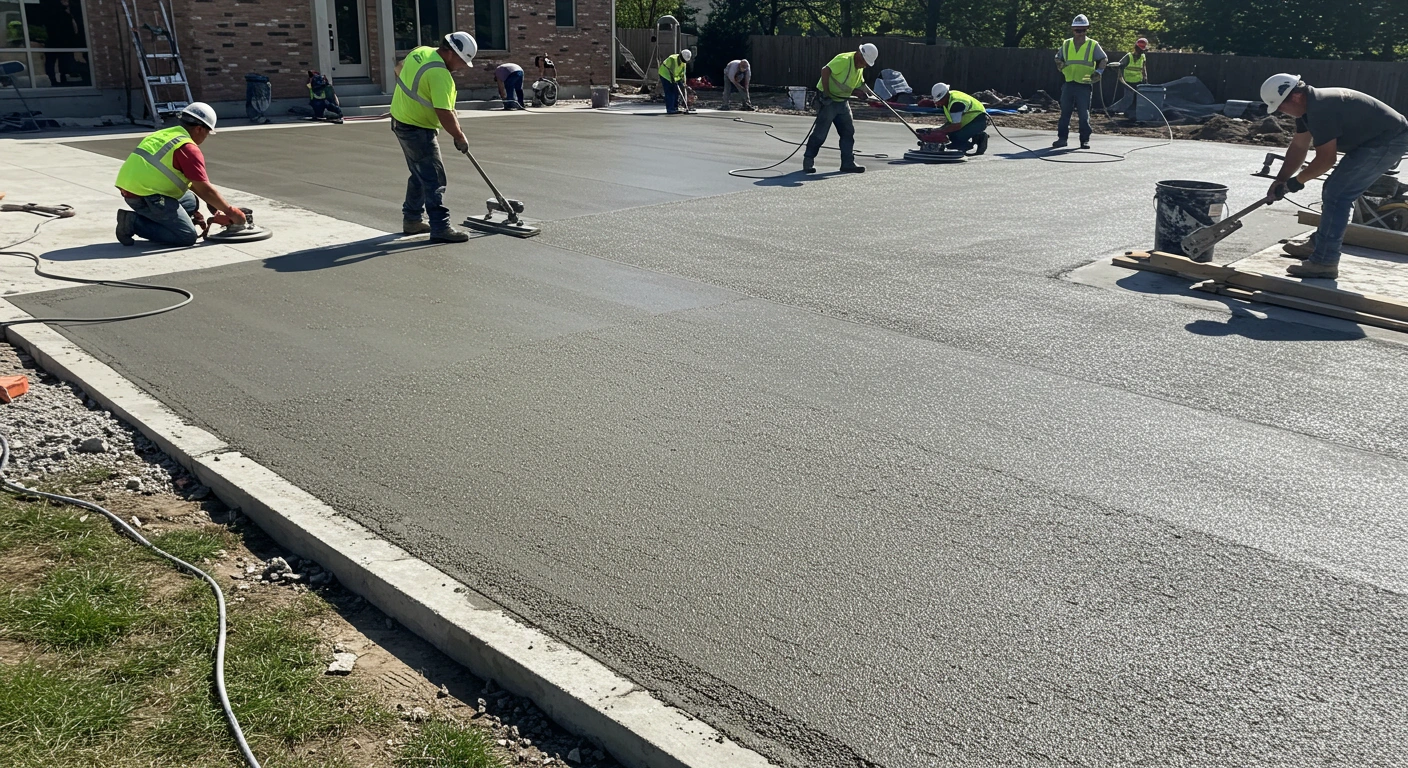
When most DFW homeowners think about concrete projects, their minds go to driveways and patios. But some of the most impactful and most frequently needed concrete work on any residential property falls under a category that doesn't get nearly as much attention: concrete flatwork.
Concrete flatwork is exactly what it sounds like — any horizontal concrete surface that isn't a driveway or a major foundation. Sidewalks. Front walkways. Side yard paths. Garage aprons. Pool decks. Garden paths. Steps. The connecting surfaces that tie your entire property together and make your home functional, safe, and polished from every angle.
In the Dallas-Fort Worth area, flatwork is one of the most requested concrete services for a simple reason: the North Texas climate — extreme heat, clay soil movement, and hard rain — is relentless on any horizontal surface. DFW homeowners deal with cracked sidewalks, heaving walkways, deteriorating garage aprons, and uneven steps on a regular basis. And when those surfaces need to be replaced or installed new, the difference between a contractor who understands local conditions and one who doesn't shows up within a few years.
This guide covers everything you need to know about concrete flatwork in DFW — what it includes, what it costs in 2025, how to do it right in North Texas conditions, and what to watch for when choosing a contractor.
What Is Concrete Flatwork?
Concrete flatwork refers to any concrete surface that is poured and finished horizontally at or near ground level. It's the category of concrete work that connects, defines, and frames the functional spaces of your property.
Common concrete flatwork projects for DFW homeowners include:
Front walkways and entry paths — The walkway from your driveway or street to your front door is one of the first things visitors see and one of the most-used surfaces on your property. A cracked, uneven, or deteriorated front walkway creates a poor first impression and a trip hazard. A new concrete walkway dramatically improves curb appeal and adds everyday functionality.
Side yard and garden paths — Concrete paths through side yards, gardens, and along the exterior of the home direct foot traffic, protect landscaping, and give your property an intentional, finished look. In DFW backyards where outdoor living is a year-round priority, well-placed concrete paths complete the design.
Sidewalks — Whether connecting sections of your property, running along the street frontage, or linking your driveway to your backyard, concrete sidewalks are durable, low-maintenance, and built to handle the foot traffic and weather cycles of North Texas.
Garage aprons — The concrete slab that transitions from your driveway into your garage opening. Garage aprons take significant abuse from vehicle traffic, oil and chemical exposure, and the constant weight of heavy vehicles starting and stopping. They deteriorate faster than most flatwork surfaces and are one of the most frequently replaced concrete sections on DFW properties.
Pool decks — The concrete surrounding a swimming pool needs to be slip-resistant, heat-reflective, moisture-resistant, and durable enough to handle constant water exposure and heavy foot traffic. Pool deck flatwork in North Texas also has to manage the expansive clay soil underneath — a surface that looks great on day one but is built on improperly prepared ground won't hold up through DFW summer and rain cycles.
Steps and stoops — Concrete steps at front entries, side doors, and back patios are a standard flatwork application — and one that requires precise forming and finishing to ensure safety, drainage, and a professional appearance.
Utility pads — HVAC equipment pads, generator pads, and other utility concrete slabs are small but important flatwork projects that need to be leveled, reinforced, and drained properly.
All of these projects share the same core requirements: proper base preparation, correct reinforcement for DFW soil conditions, sound concrete mix design, careful finishing, and adequate curing. Done right, concrete flatwork in North Texas lasts 25 to 40 years. Done wrong, it cracks and shifts within a few years.
Why Concrete Flatwork Fails in DFW — And How to Prevent It
The number one cause of cracked, heaved, and deteriorated concrete flatwork in the Dallas-Fort Worth area isn't poor concrete quality. It's poor preparation. Understanding why flatwork fails in DFW specifically helps homeowners ask the right questions before any project begins.
Expansive clay soil — the root of most DFW flatwork problems.The clay-heavy soil found throughout Fort Worth, Keller, Southlake, Colleyville, and surrounding DFW communities absorbs moisture and swells significantly after heavy rain, then contracts and pulls away from the concrete during hot, dry periods. This constant cycle pushes up against the underside of any concrete slab, creating uneven pressure that causes cracking and heaving over time.
A concrete flatwork slab poured directly on unprepared clay soil — without proper excavation, gravel base, and compaction — will reflect the soil's movement within a few years. The concrete itself may be perfectly mixed and finished, but the ground beneath it is in constant motion.
Proper flatwork installation in DFW requires:
- Excavating to remove unstable topsoil and reach a stable subgrade
- Installing a compacted gravel base of 4 inches minimum to provide drainage and cushion
- Grading the base for proper drainage away from structures
- Compacting the subgrade to a consistent density before any concrete is poured
Tree roots — an underestimated threat.North Texas homeowners with mature trees near their walkways and sidewalks know this issue well. Tree roots seeking moisture will grow laterally under any concrete surface, lifting and cracking slabs from below with enormous force. When planning a new concrete walkway or replacing an existing one near trees, a professional contractor will assess root proximity and recommend appropriate solutions — root barriers, adjusted paths, or alternative surface solutions in the most challenging areas.
Improper drainage.Any concrete flatwork surface needs a minimum slope of 1/8 to 1/4 inch per foot to direct water away from structures and off the surface. Flat or reverse-sloped concrete traps water, which seeps into any cracks, freezes during occasional DFW winter events, and expands those cracks from within. In North Texas clay soil, water pooling under a slab accelerates the swelling-and-contracting cycle dramatically.
Skipped reinforcement.Residential flatwork is sometimes poured without reinforcement — wire mesh or rebar — as a cost-cutting measure. In North Texas clay soil, skipping reinforcement is a false economy. Concrete without reinforcement has no mechanism to hold the slab together when the soil beneath shifts. The result is individual cracked pieces that shift independently, creating uneven trip hazards across the surface.
Inadequate curing in Texas heat.In DFW summer conditions, concrete flatwork poured during peak heat can lose moisture too quickly — particularly on large surfaces where the sun beats directly on fresh concrete. Rapid moisture loss prevents the concrete from fully hydrating during the curing process, producing a weaker surface that's more prone to cracking and surface scaling. Quality concrete crews working in North Texas manage curing with compound applications and scheduling that accounts for temperature.
Types of Concrete Flatwork Finishes for DFW Homeowners
One of the most common questions homeowners ask before a flatwork project is: what finish options are available? The answer has expanded significantly beyond plain gray concrete. Here's what DFW homeowners typically choose:
Broom finish — The most common residential flatwork finish. A stiff brush is dragged across the surface while the concrete is still fresh, creating a slightly textured, non-slip surface. It's clean, professional, durable, and the most cost-effective option. Broom finish is the standard for most walkways, sidewalks, and utility flatwork across Fort Worth and DFW.
Exposed aggregate — The top layer of cement paste is removed during finishing to reveal the natural stones and pebbles within the concrete mix. The result is a textured, naturally attractive surface with excellent slip resistance. Particularly popular for pool decks and exterior paths in DFW where grip and aesthetics both matter.
Stamped concrete flatwork — Stamp patterns are pressed into the fresh concrete to create the appearance of brick, stone, slate, or wood. Stamped flatwork on walkways and pool decks creates a high-end, cohesive look that ties decorative elements of your outdoor space together. It's the premium option that adds the most visual impact.
Stained or colored concrete — Pigment added to the mix or acid stain applied to a cured surface creates rich, permanent color that elevates plain gray flatwork without the full cost of stamping. Popular for front walkways, pool decks, and anywhere curb appeal is a priority.
Smooth finish — A steel-troweled surface creates a smooth, dense, reflective finish. More commonly used for interior applications and garage floors than outdoor flatwork in DFW, where slip resistance is important — but can be specified with a non-slip additive for outdoor use.
What Does Concrete Flatwork Cost in DFW in 2025?
Flatwork pricing in Fort Worth and surrounding DFW communities depends on the type of project, size, finish, and site conditions. Here's a realistic breakdown:
Standard concrete walkway or sidewalk (broom finish, reinforced):
- $6 to $12 per square foot installed
- Average cost for a 200 sq ft walkway: $1,200 to $2,400
- Average cost per linear foot for a 4-foot-wide walk: $24 to $48
Decorative or stamped concrete flatwork:
- $12 to $20 per square foot for stamped walkways and paths
- Stained or colored concrete walkways: $10 to $15 per square foot
Replacement (including demolition of existing concrete):
- Add $2 to $6 per square foot for removal and hauling of existing flatwork
- Replacement total: $8 to $16 per square foot depending on finish
Garage apron (standard, reinforced):
- $6 to $10 per square foot depending on thickness and site conditions
- Typical single-car garage apron (approx. 10 ft x 18 ft): $1,080 to $1,800
Pool deck flatwork:
- Broom or exposed aggregate finish: $6 to $12 per square foot
- Stamped pool deck: $12 to $18 per square foot
- Pool deck projects are sized per the specific layout — typical residential pool decks in DFW range from 400 to 800 square feet
Concrete steps:
- $300 to $500 per step for standard poured concrete steps, depending on width and design
Additional cost factors for DFW flatwork:
- Gravel base installation: $1 to $2 per square foot
- Excavation in challenging soil: $1 to $3 per square foot additional
- Decorative edging or borders: $5 to $12 per linear foot
- Sealing (applied after curing): $1 to $2.50 per square foot
The general rule for concrete flatwork in Texas runs $4 to $10 per square foot for standard residential work — with decorative finishes pushing costs toward $15 to $20 per square foot. Getting a detailed written quote from a local contractor is the only accurate way to budget your specific project.
Concrete Flatwork Maintenance: How to Make It Last in North Texas
Once your flatwork is installed, a few straightforward habits dramatically extend its lifespan in the DFW climate:
Seal it and reseal it. A penetrating concrete sealer applied after full curing (28 days) protects the surface from moisture intrusion, oil and chemical staining, and UV degradation. In the North Texas climate, plan to reseal flatwork every 3 to 5 years. For decorative or stamped surfaces, every 2 to 3 years. This is the single highest-impact maintenance step you can take.
Keep control joints sealed. The saw-cut or tooled joints in your concrete flatwork are there for a reason — they give the slab a designated place to accommodate movement. When those joints open up from soil movement or weathering, water gets in. Inspect and reseal control joints every 2 to 3 years to prevent moisture from working its way beneath the slab.
Address small cracks early. Hairline cracks in North Texas concrete are common and mostly cosmetic. But left unsealed, they allow water to penetrate, which accelerates the damage cycle in DFW's clay soil and freeze-thaw events. Fill and seal small cracks promptly before they widen.
Manage drainage around your flatwork. Make sure landscaping, mulch beds, and soil grades aren't directing water toward your concrete. Soil that builds up against the edge of a slab and holds moisture accelerates deterioration at the most vulnerable point of the slab — the perimeter edge.
Don't use harsh deicers on concrete. On the rare occasion North Texas experiences a hard freeze, resist using rock salt or harsh chemical deicers on concrete flatwork. These accelerate surface scaling and freeze-thaw damage. Sand or calcium magnesium acetate are safer alternatives.
5 Questions to Ask Before Hiring a Concrete Flatwork Contractor in DFW
Not every concrete contractor in the Dallas-Fort Worth area approaches flatwork with the same level of care. Here's what to ask before you commit:
1. Do you use a gravel base under your flatwork?In DFW clay soil, a compacted gravel base isn't optional — it's essential. A contractor who pours directly onto clay without base preparation is cutting a corner that will show up in your slab within a few years.
2. Will you use reinforcement?Wire mesh minimum, rebar preferred, for any flatwork in North Texas. Ask specifically what reinforcement they use and how it's placed.
3. How do you handle curing in Texas summer conditions?Any experienced DFW concrete contractor should be able to describe their hot-weather curing protocol clearly.
4. Is your crew in-house or subcontracted?Consistency matters in flatwork. A crew that shows up together, works together, and finishes together produces more consistent results than a rotating cast of subcontractors at different stages of the job.
5. Can you walk me through the drainage plan?Your contractor should be able to explain specifically how water will run off your new surface and where it will go. If they haven't thought about it, you'll find out the hard way.
CBD Concrete: Concrete Flatwork Across the DFW Metroplex
CBD Concrete is a locally owned, family-operated concrete contractor serving Fort Worth, Keller, Southlake, Colleyville, and the greater Dallas-Fort Worth Metroplex. Owner Dane and his in-house crew handle every flatwork project with the same care and craftsmanship as larger foundation and commercial work — because the quality of a front walkway or side yard path reflects on every other project they do.
Every flatwork project CBD Concrete takes on is handled entirely in-house. No subcontractors. No hand-offs. Dane personally coordinates base prep, forming, pour, and finishing — making sure the details that determine long-term performance in DFW soil and weather are done correctly every time.
CBD Concrete's flatwork services include:
- Front and side yard walkways and entry paths
- Sidewalks — residential and commercial
- Garage aprons and driveway approaches
- Pool decks — standard and decorative finishes
- Concrete steps and stoops
- Garden paths and connecting surfaces
- Utility and equipment pads
- Any horizontal concrete surface that defines and connects your property
With over 20,000 yards of concrete poured across the DFW Metroplex and a 5-star Google rating, CBD Concrete has built a track record of showing up, doing the work right, and delivering flatwork that holds up through North Texas seasons.

Whether you need a new front walkway, a pool deck replacement, a garage apron, or any other concrete flatwork in Fort Worth, Keller, Southlake, Colleyville, or anywhere in the DFW area — CBD Concrete is ready to assess your project and deliver a free, detailed quote with no pressure.


.svg)
.svg)