


Concrete Foundations in DFW: What Homeowners Need to Know Before Breaking Ground
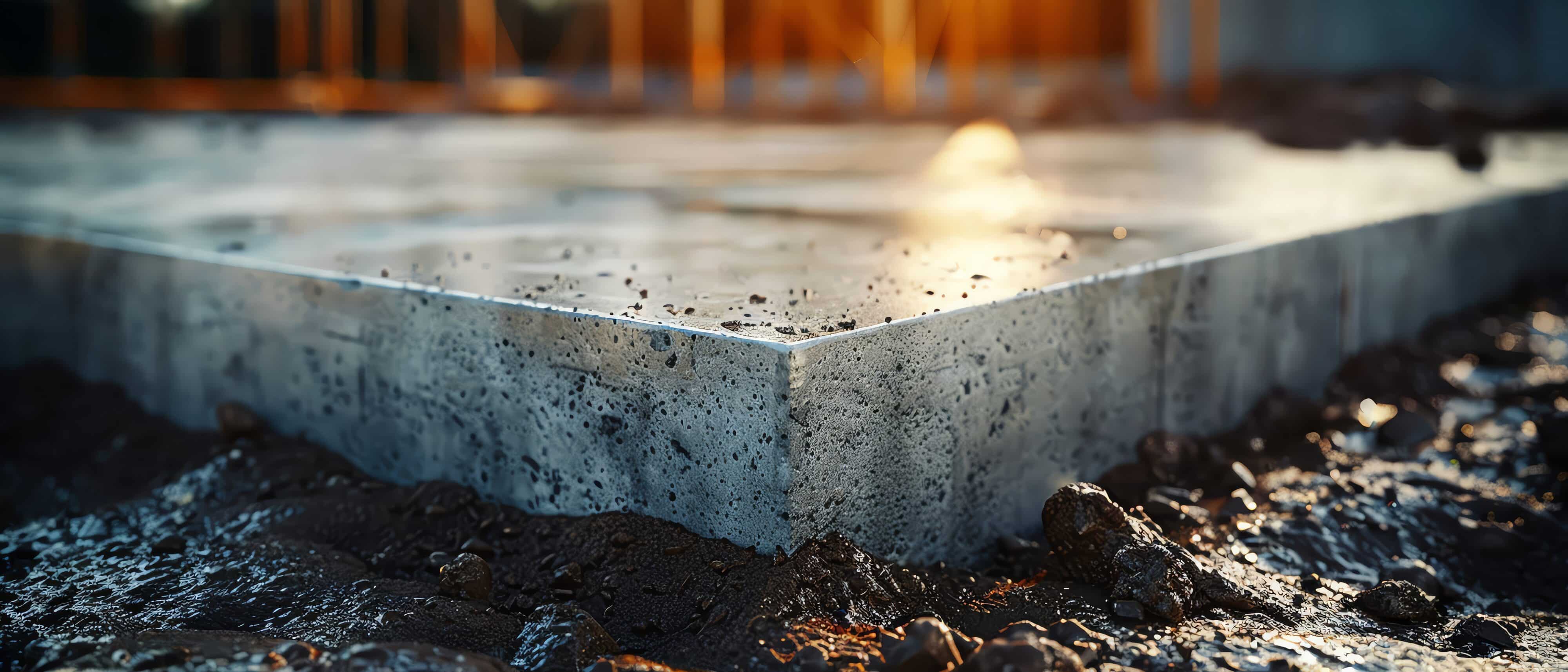
If you're planning a new home build or an addition in the Dallas-Fort Worth area, the foundation isn't just the first thing that gets poured — it's the most important decision your entire project rests on. Literally.
In North Texas, getting a concrete foundation right is more complex than in most parts of the country. The expansive clay soil that runs under virtually every lot in Fort Worth, Keller, Southlake, Colleyville, and the surrounding DFW communities creates unique engineering challenges that most homeowners don't fully understand until something goes wrong. And by then, the cost of fixing a foundation that was done poorly is almost always far greater than the cost of doing it right the first time.
This guide is written specifically for DFW homeowners and builders who want to understand what goes into a quality concrete foundation — new construction and foundation additions alike — what it costs in 2025, and what separates a foundation built to last from one that will cause problems for decades.
Why Concrete Foundations in DFW Are Different From the Rest of the Country
Walk into any neighborhood in Fort Worth, Keller, or Southlake and you're standing on some of the most challenging soil in the United States for building foundations. North Texas is home to deep, highly reactive expansive clay soil — and understanding what that means is the starting point for any new concrete foundation project in the area.
Clay soil has a unique and destructive property: it absorbs water and swells dramatically after heavy rain, then contracts and shrinks significantly during the dry, hot DFW summers. This cycle of expansion and contraction — which happens multiple times a year in North Texas — exerts enormous upward and downward pressure on any concrete slab sitting on top of it.
The DFW area is actually considered to have some of the highest soil plasticity in the United States. Within any given season, it's common to experience extended drought conditions followed by intense spring storms — a swing that can cause the soil beneath a foundation to move inches in either direction. When a foundation isn't engineered specifically for this kind of soil movement, the results are predictable: cracking, uneven settling, sticking doors and windows, and eventually, structural failure.
This is why new concrete foundations in DFW require engineering solutions that simply don't exist in other parts of the country — and why hiring a concrete contractor who actually understands North Texas soil conditions isn't optional. It's everything.
Types of Concrete Foundations Common in DFW
Before diving into what makes a quality foundation pour, it helps to understand which foundation types are most common across Fort Worth and the surrounding DFW Metroplex:
Slab-on-Grade Foundation
The slab-on-grade is by far the most common foundation type for new homes in Fort Worth and the greater DFW area. In this design, a thick concrete slab is poured directly onto a prepared subgrade, and the home is built on top of it. Properly designed for North Texas soil conditions, a slab-on-grade foundation is strong, cost-effective, durable, and requires minimal ongoing maintenance.
Modern slab-on-grade foundations in DFW are far more sophisticated than the simple slabs poured in earlier decades. Current standards require:
- Engineered foundation design based on specific soil testing results
- Adequate slab thickness — typically a minimum of 4 inches, with edge beams significantly thicker
- Steel reinforcement throughout — rebar in a grid pattern, sometimes supplemented with wire mesh
- Post-tensioning cable systems in many modern builds, which compress the slab from within and dramatically improve its ability to resist soil movement
- Proper moisture barriers beneath the slab to control groundwater intrusion
Concrete slab foundation cost in DFW: Foundation work in the Dallas area typically runs between $5.31 and $20.03 per square foot, with the higher end reflecting engineered solutions for challenging clay soil conditions. For a standard residential foundation on a 2,000 sq ft footprint, budget $10,000 to $30,000 for quality slab work with proper reinforcement.
Post-Tensioned Slab Foundation
Post-tensioned slabs have become the standard for new construction throughout the DFW Metroplex. In this system, high-strength steel cables are threaded through the concrete before it's poured. After the concrete cures, the cables are tensioned using hydraulic jacks — placing the entire slab in compression and significantly increasing its ability to resist the lifting and settling forces created by North Texas clay.
Post-tensioning is now required or strongly recommended by engineers for most new builds in the DFW area. It's not an upgrade — it's the baseline expectation for a foundation built to perform in North Texas soil. The difference in long-term performance between a properly post-tensioned slab and a conventionally reinforced one in DFW clay conditions is significant.
Foundation Additions
Foundation additions are a separate but equally important category. When a homeowner wants to expand their existing home — adding a room, a garage, a sunroom, an in-law suite, or additional living space — the new addition needs its own properly engineered concrete foundation that ties into the existing structure.
Foundation additions in DFW are more complex than simply pouring a new slab next to an old one. The new foundation needs to:
- Match the bearing capacity of the existing foundation
- Account for soil conditions at the specific expansion site
- Be properly connected to the existing structure to prevent differential settling
- Meet current DFW building codes and permit requirements — which have become significantly more stringent than the codes in place when many older homes were originally built
A foundation addition done by an experienced, local concrete contractor is a seamless structural expansion. A foundation addition done incorrectly leads to cracking at the joint, differential settling between old and new, and structural problems that are expensive and disruptive to fix after the fact.
What Goes Into a Quality Concrete Foundation Pour in North Texas
Understanding the process behind a quality concrete foundation in DFW helps homeowners ask the right questions and recognize when corners are being cut. Here's what a properly executed foundation pour involves:
Step 1: Soil Testing and Engineering
Before any concrete is poured for a new foundation in DFW, the soil should be tested and a foundation engineer should produce a site-specific design. North Texas has some of the highest soil plasticity in the country — the foundation design for one lot may be different from the lot directly next door based on soil depth, drainage, and moisture content. Engineering isn't an optional add-on. It's the foundation of the foundation.
Step 2: Site Preparation and Excavation
The subgrade preparation is the most critical physical step in the entire process. This involves:
- Removing topsoil and any unstable material down to a stable subgrade
- Grading the site to ensure proper drainage away from the foundation footprint
- Compacting the subgrade to the specified density
- Installing a moisture barrier (vapor retarder) to limit groundwater migration into the slab
- Placing compacted gravel or crushed stone fill where needed to create a stable, uniform bearing surface
Skimping on subgrade preparation is the single most common cause of foundation problems in DFW. The soil work that happens before the concrete is poured determines whether your foundation holds for 50 years or cracks within five.
Step 3: Formwork and Reinforcement
Forms are set to define the perimeter and interior dimensions of the slab, including the deeper edge beams that run around the perimeter and under any load-bearing interior walls. Rebar is placed in a grid pattern per the engineer's specifications — the exact size, spacing, and depth of the steel matters and must match the engineering drawings.
For post-tensioned slabs, the cable system is laid out prior to the pour. Everything is inspected against the engineered drawings before any concrete is called in.
Step 4: The Pour
In DFW, concrete foundation pours are carefully timed around weather conditions. Ideal temperatures for a foundation pour are between 50°F and 90°F — meaning Texas summers require careful scheduling and monitoring. When temperatures exceed 90°F, the water in the concrete mix evaporates too quickly, which reduces the concrete's ability to hydrate fully and weakens the final slab.
Professional concrete crews working in North Texas use mix designs formulated for the local climate — with the right water-to-cement ratio, air entrainment, and admixtures to ensure workability during the pour and full strength gain during curing.
Step 5: Curing
This is the step most often underestimated. Concrete doesn't just dry — it cures through a chemical hydration process that continues for 28 days after the pour. During this window, the concrete gains the majority of its final compressive strength. In DFW, proper curing means keeping the surface moist and protected from rapid moisture loss during Texas heat.
For a foundation pour, premature strength gain (caused by too-rapid drying in hot weather) can create internal stresses that show up as surface cracking within the first year. Curing compounds, wet burlap coverings, and careful scheduling are the professional standard.
Step 6: Post-Tensioning (If Applicable)
For post-tensioned slabs, the cables are tensioned 5 to 10 days after the pour — once the concrete has reached sufficient strength to accept the load. This is precision work that must be done correctly to spec. Overtensioned or undertensioned cables create uneven stress distribution across the slab and can lead to cracking or failure over time.
Foundation Additions: What DFW Homeowners Need to Know
Foundation additions are one of the most common projects CBD Concrete handles across Fort Worth, Keller, and surrounding DFW communities — and they come with unique considerations that standard new construction doesn't face.
Matching the existing structure. When you add a new concrete foundation to an existing home, the new slab needs to settle at the same rate as the old one. This is more complicated than it sounds in DFW clay soil, where the existing foundation has already gone through years of soil movement cycles. Proper soil prep, correct reinforcement, and the right connection detail at the joint between old and new are what prevent differential movement — where the addition slowly separates from the main structure over time.
Building codes have changed. Many DFW homes were built under older code requirements that don't meet current standards. A foundation addition today must be designed and built to current code — which is generally more stringent than what existed when the original home was poured. A reputable contractor will handle permitting and engineer coordination as part of the project.
Connection details matter. How the new foundation ties into the existing one — the specific reinforcement method used to connect new concrete to old — is one of the most technically critical parts of any foundation addition project. This is not the place to improvise or cut costs.
Common foundation addition projects in DFW include:
- Room additions — extra bedrooms, home offices, playrooms
- Garage additions — attached or detached
- Sunrooms and enclosed patios with permanent foundations
- In-law suites and ADUs (accessory dwelling units)
- Second-story additions that require upgrading the existing foundation to carry increased load
How Much Does a New Concrete Foundation Cost in DFW?
Concrete foundation costs in DFW in 2025 vary based on the size of the project, the soil conditions on site, the level of reinforcement required, and whether engineering and post-tensioning are involved.
Concrete foundation cost benchmarks for DFW:
- Foundation work in Dallas typically ranges from $5.31 to $20.03 per square foot, with the high end reflecting engineered solutions for challenging soil
- Concrete slab foundations: $7 to $11 per square foot for standard residential work
- Post-tensioned slabs and engineered foundation systems: $10 to $20 per square foot
- Complete foundation for a 2,000 sq ft home footprint: $10,000 to $30,000+ depending on engineering requirements and soil conditions
- Foundation addition (room or garage): varies by size and site conditions — typically $8,000 to $30,000+ for a properly built residential addition
Additional costs to factor in:
- Soil testing and foundation engineering: $500 to $2,500 depending on scope
- Site preparation, excavation, and grading: $2,000 to $10,000 depending on site conditions
- Permits: $500 to $5,000 depending on municipality and project scope
- Post-tensioning labor and materials: additional cost over standard rebar-only systems
Foundation work accounts for approximately 10 to 15 percent of the total budget for a new home build in DFW. It's the part of the project that's buried underground and invisible once the home is built — which is exactly why it deserves the most careful contractor selection and the most rigorous quality control.
6 Questions to Ask Any Concrete Foundation Contractor in DFW
Before you hire anyone to pour your foundation in the Dallas-Fort Worth area, make sure you can get clear, confident answers to these questions:
1. Do you pull your own permits?In DFW, new foundations and foundation additions require building permits in virtually every municipality. A contractor who hesitates on this is a red flag.
2. Will you work from an engineered foundation design?Any foundation pour in DFW clay soil should be based on a site-specific engineering drawing. If a contractor is willing to pour without one, walk away.
3. How do you handle the subgrade preparation?This is the most critical step. Ask specifically about excavation depth, gravel base, compaction, and vapor barrier. Vague answers here are a warning sign.
4. What reinforcement system do you use?Rebar sizing, spacing, and depth matter. So does whether the project calls for post-tensioning. A quality contractor can explain their reinforcement approach clearly.
5. Do you use an in-house crew or subcontractors?Foundation work requires consistency and accountability across every step. Contractors who use rotating subcontractors have less control over quality at each stage.
6. How do you handle curing in Texas summer conditions?Any experienced DFW concrete contractor should have a clear curing protocol for hot-weather pours.
CBD Concrete: New Foundations and Foundation Additions Across DFW
CBD Concrete is a locally owned, family-operated concrete contractor serving Fort Worth, Keller, Southlake, Colleyville, and the greater Dallas-Fort Worth Metroplex. Owner Dane and his in-house crew have poured over 20,000 yards of concrete across DFW — including new foundations for new builds and foundation additions for homeowners expanding their existing homes.
Every foundation project CBD Concrete takes on is handled entirely with their own crew. No subcontractors. No hand-offs at critical stages. Just a team that Dane personally works alongside on every job, with the local soil knowledge and construction experience that North Texas foundations demand.
CBD Concrete handles:
- New foundations for new home builds in Fort Worth and throughout DFW
- Foundation additions for room additions, garages, sunrooms, and in-law suites
- Coordination with engineers and permitting offices throughout the DFW Metroplex
- Site prep, excavation, reinforcement, and concrete work — all in-house from start to finish

Planning a new build or a home addition in Fort Worth, Keller, Southlake, or anywhere in the DFW area? The foundation is where everything starts — and CBD Concrete will make sure it's done right. Get a free, detailed quote with no pressure.


.svg)
.svg)