


How to Choose a Concrete Contractor in DFW: 10 Questions Every Homeowner Should Ask
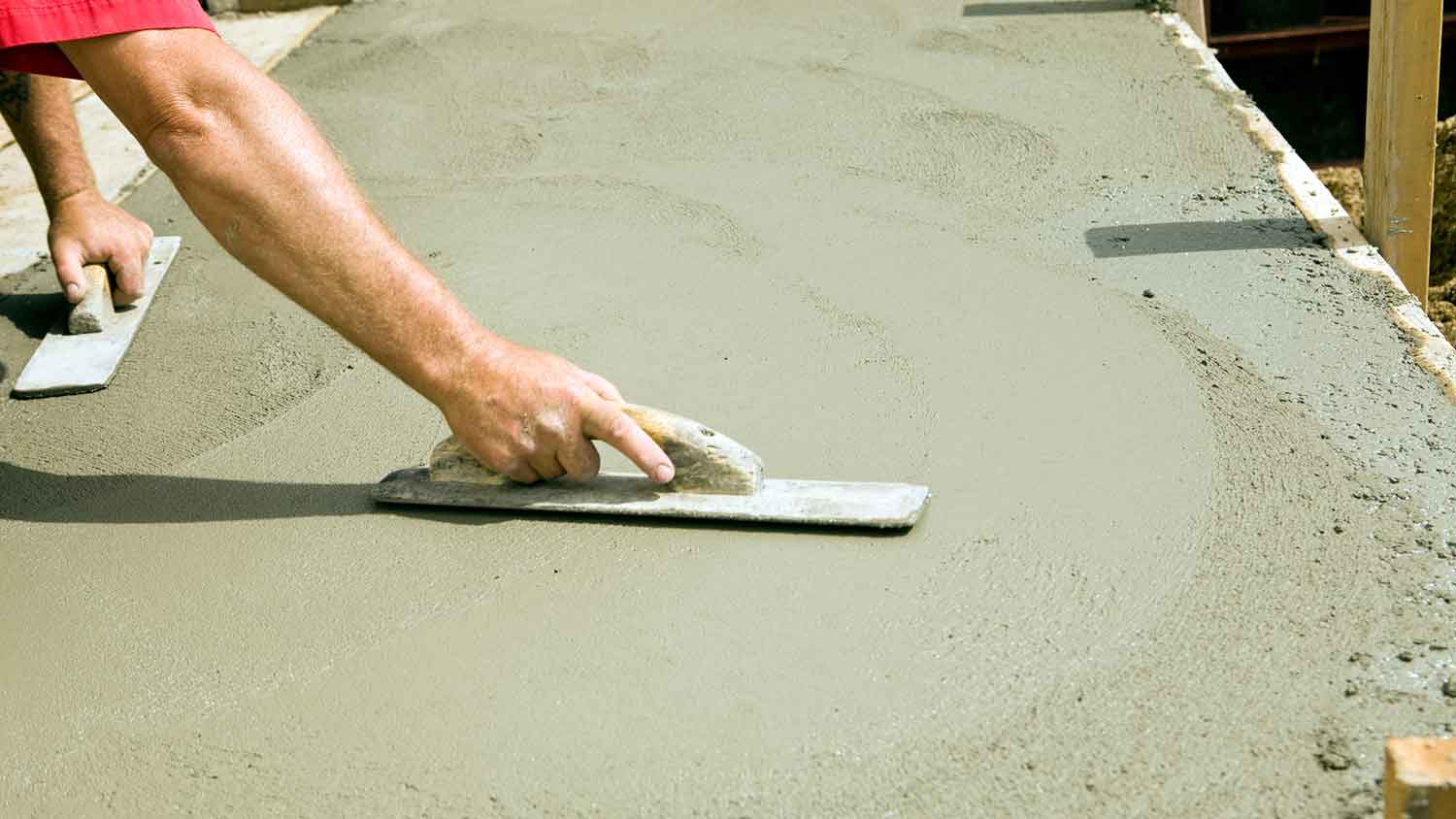
There is no shortage of concrete contractors in the Dallas-Fort Worth area. Open Google, type "concrete contractor near me," and you'll have dozens of options within seconds. Some of them are outstanding. Some of them will take your deposit, pour a slab that fails within three years, and be unreachable when you try to follow up.
The challenge for DFW homeowners isn't finding a concrete contractor — it's knowing how to choose the right one. And in North Texas, where expansive clay soil, extreme heat, and shifting ground conditions make concrete work significantly more technical than in most parts of the country, that choice matters more than most homeowners realize.
This guide gives you exactly what you need to make a confident, informed decision: the ten questions every DFW homeowner should ask before hiring a concrete contractor, the red flags that signal a contractor you should walk away from, and the qualities that consistently separate the best concrete work in DFW from the rest.
Why Choosing the Right Concrete Contractor in DFW Matters More Than You Think
Concrete is deceptive. On the surface, it looks simple — mix it, pour it, let it cure. But the difference between a driveway that lasts 35 years and one that starts cracking within five almost never comes down to the concrete itself. It comes down to what the contractor did before the first yard of concrete was ever called in.
In the DFW area specifically, the technical demands of quality concrete work are higher than most of the country. The clay soil under every property in Fort Worth, Keller, Southlake, Colleyville, and surrounding communities is reactive — it swells with moisture and contracts in drought, creating constant movement beneath any slab. A contractor who doesn't understand this, or who cuts corners on base preparation and reinforcement to win jobs on low bids, is setting your concrete up to fail.
The other reality is that once concrete is poured and cured, what's underneath it is invisible. You can't see whether the subgrade was properly prepared, whether the gravel base is adequate, or whether the reinforcement is where it should be. You have to trust the contractor — which means that contractor selection is the most consequential decision in the entire project.
Getting it right means your concrete performs for decades. Getting it wrong means cracks, callbacks, and eventually a full replacement at your own expense.
Here's how to get it right.
10 Questions to Ask Any Concrete Contractor in DFW Before You Hire
1. Are You Licensed and Insured in Texas?
This is the baseline. Any concrete contractor working on your property in the DFW area should carry general liability insurance and workers' compensation coverage. These protect you from financial responsibility if something goes wrong during the project — property damage, an injury to a crew member, or damage to adjacent structures.
Ask to see proof of insurance, not just a verbal confirmation. A reputable contractor will have documentation ready and won't hesitate to provide it. No insurance means any incident on your property becomes your problem — and in Texas, that's not a risk worth taking.
Beyond insurance, confirm the contractor holds any required business licenses for the municipality where your project is located. Licensing requirements vary across DFW cities — Fort Worth, Keller, Southlake, and Colleyville each have their own requirements — and a contractor familiar with local regulations demonstrates local operational experience.
2. Is Your Crew In-House or Do You Use Subcontractors?
This question separates a lot of contractors quickly, and the answer matters enormously for the quality and consistency of your project.
Some concrete contractors — especially those that appear to offer very low bids — operate as brokers. They win the job, then hire whoever is available at the time to actually do the work. The crew that shows up may have limited experience with the specific project type, limited familiarity with DFW soil conditions, and zero ongoing accountability to the contractor who sold you the job.
An in-house crew means the owner works with the same people on every job. They've developed consistent practices, they understand the contractor's standards, and there's direct accountability at every stage of the project. In North Texas, where the technical demands of concrete work are higher than most markets, consistency of crew matters. Ask specifically — and if the answer is vague, ask again.
3. How Do You Prepare the Subgrade Before You Pour?
This is the most important technical question you can ask, and a contractor's answer will tell you more about the quality of their work than any other single factor.
In DFW clay soil, proper subgrade preparation is what determines whether your concrete lasts 5 years or 35. The right answer should include:
- Excavating to remove unstable topsoil
- Installing and compacting a gravel base (typically 4 to 6 inches for residential work)
- Grading the base for proper drainage
- Compacting the subgrade to a consistent density before forming
A contractor who gives a vague answer, dismisses the question, or implies they pour directly on native soil is flagging a significant quality shortcut. This is the detail most DFW homeowners don't know to ask about — which is exactly why bad contractors skip it.
4. What Reinforcement Will You Use?
Concrete in North Texas should be reinforced — full stop. Wire mesh at minimum, rebar preferred for most residential applications, and heavier reinforcement for commercial-use slabs or projects in particularly challenging soil conditions.
Ask specifically: what size rebar, what spacing, and how will it be supported off the ground during the pour? Reinforcement that sinks to the bottom of the slab during the pour — a common result of improper placement — provides virtually no structural benefit. It needs to be positioned in the middle third of the slab to do its job.
A quality contractor will answer this question confidently and specifically. Vague answers like "we use standard reinforcement" without specifics deserve follow-up.
5. How Do You Handle Curing in Texas Summer Heat?
In DFW, concrete pours during the summer months — when temperatures regularly push past 100°F — require specific curing management. Concrete that loses moisture too quickly in the heat doesn't fully hydrate, which produces a weaker surface that's more susceptible to cracking and surface scaling.
A qualified concrete contractor in Fort Worth and the surrounding area should be able to describe their hot-weather curing protocol clearly: curing compound application, timing adjustments for pour scheduling, and any other measures they take to protect fresh concrete from rapid moisture loss during Texas summer conditions.
If a contractor hasn't thought about this, or doesn't have a specific answer, that's a meaningful gap for a DFW contractor.
6. Will You Handle Permits?
Most concrete projects in DFW municipalities require building permits — new driveways, patios over a certain size, foundations, additions, and commercial work almost universally require them. An experienced, professional concrete contractor should handle the permit process as part of the project scope.
A contractor who asks you to pull your own permits, suggests permits aren't necessary when they are, or is unfamiliar with the permitting requirements in your specific city is waving a red flag. Operating without required permits creates liability for the homeowner at resale and can result in fines or required demolition of unpermitted work.
7. Can You Provide References From Similar Local Projects?
Reputation is the most reliable indicator of what your experience with a contractor will actually look like. Ask for references from homeowners in Fort Worth, Keller, Southlake, Colleyville, or nearby DFW communities who had similar projects completed in the past 12 to 24 months.
When you follow up with references, ask specifically about: whether the project came in on time, whether the site was kept clean, whether communication was consistent throughout, and whether the concrete has held up since installation. In DFW, a driveway or patio that was poured 18 months ago and has already developed cracks or uneven sections tells you something critical about that contractor's base preparation practices.
Online reviews on Google are also a reliable signal — look at volume, recency, and specifically what reviewers mention about the contractor's process and communication, not just the finished product.
8. What Does Your Written Quote Include?
A professional concrete contractor in DFW should provide a detailed, itemized written quote — not a rough verbal estimate. The written quote should specify:
- The exact scope of work (dimensions, thickness, finish type)
- Materials to be used (concrete mix design, reinforcement type and sizing)
- Site preparation included (excavation, gravel base, compaction)
- Timeline and scheduling
- Total cost with a clear breakdown
- What is explicitly excluded from the scope
Vague quotes that list only a total price without itemization give the contractor room to cut corners without your knowledge — and leave you with no documentation to reference if there are disputes after completion. Never sign a contract based on a verbal estimate alone.
9. What Is Your Payment Structure?
Standard practice for reputable concrete contractors in the DFW area is a deposit at contract signing — typically 10 to 30 percent of the project total — with the balance due upon satisfactory completion. Some larger projects use milestone-based payments tied to specific project stages.
Be cautious of any contractor who asks for full payment upfront before work begins. This removes all financial leverage you have to ensure the project is completed to your satisfaction. Similarly, be wary of contractors who accept only cash — legitimate businesses accept checks or electronic payment and provide receipts.
A reasonable deposit is standard and appropriate. Full payment before the first yard of concrete is poured is a warning sign.
10. What Happens If There's a Problem After the Pour?
Every homeowner should understand what recourse they have if issues arise after the project is complete. A reputable concrete contractor in DFW will stand behind their work — ask specifically about their workmanship warranty, what it covers, and the process for addressing problems.
Concrete is not flawless. Hairline cracking is common and largely cosmetic. But significant cracking, uneven settling, or surface failures in the first few years almost always point back to inadequate base preparation or reinforcement — the steps that happen before the pour. A contractor confident in their process will be willing to back it up in writing.
7 Red Flags That Should Make You Walk Away
Beyond the questions above, watch for these specific warning signs when evaluating concrete contractors in DFW:
1. The bid is dramatically lower than everyone else.In concrete work, a significantly lower bid almost always means something is being cut — typically base preparation, reinforcement, or concrete mix quality. The materials that go into a properly built slab in DFW have real costs. A bid that's 30 to 40 percent below the other quotes you've received should prompt serious questions about what's being excluded.
2. They can't explain their base preparation process.If a contractor can't clearly describe how they prepare the subgrade before pouring — excavation depth, gravel base thickness, compaction method — they either don't know or aren't doing it. In North Texas clay soil, this is the single most important part of the job.
3. They pressure you to decide immediately.High-pressure sales tactics are a red flag in any home services context. A quality contractor with a solid reputation isn't desperate for your signature today. Pressure to sign quickly is often designed to prevent you from getting competing quotes or checking references.
4. No written contract or scope of work.Verbal agreements protect no one. Any professional concrete contractor will provide a written scope and contract before work begins. A contractor who resists putting project details in writing is creating conditions that benefit them — not you.
5. They ask for full payment upfront.Standard industry practice is a deposit followed by final payment upon satisfactory completion. Full payment upfront eliminates your ability to hold the contractor accountable for delivering what was promised.
6. They can't provide local references.DFW concrete work has specific challenges that contractors in other markets don't face. A contractor who can't point to completed projects in Fort Worth, Keller, Southlake, or nearby communities — with references you can actually contact — may lack the local experience to handle North Texas soil and climate conditions confidently.
7. They use subcontractors but don't tell you.If a contractor is sending a different crew than the one you evaluated, your due diligence on their work quality may not apply to who actually shows up. Always ask directly. If you find out mid-project that a subcontract crew is on your property and you weren't told, that's a breach of trust — and a sign that other details may not be what you were told either.
What the Best Concrete Contractors in DFW Have in Common
After you've done your due diligence, the contractors who consistently deliver the best concrete work in the Dallas-Fort Worth area share a consistent set of qualities:
The owner is personally involved. The best concrete work in DFW comes from owner-operators who have their name and reputation on every job. When the owner shows up to assess your site, personally manages the pour, and is reachable throughout the project, accountability is built into every decision.
They have a stable, experienced in-house crew. Consistency of crew produces consistency of quality. The best DFW contractors work with the same people on every job — developing shared standards and practiced techniques that rotating subcontractor crews simply don't develop.
Their communication is proactive. From the initial site visit through final cleanup, top-tier contractors keep homeowners informed. They communicate scheduling, flag any site conditions that affect the plan, and are reachable when questions come up — not just when it's time to collect payment.
Their quotes are detailed and their contracts are specific. Professionalism in paperwork reflects professionalism on the job site. Contractors who provide thorough, itemized quotes and clear written contracts are demonstrating the same attention to detail they bring to your slab.
Their reviews talk about process, not just results. The most meaningful Google reviews don't just say "looks great" — they describe prompt arrivals, clear communication, clean job sites, and contractors who followed through exactly as promised. This is what you should be looking for when reading reviews of any DFW concrete contractor.
Why Homeowners Across DFW Choose CBD Concrete
CBD Concrete is a locally owned, family-operated concrete contractor serving Fort Worth, Keller, Southlake, Colleyville, and the greater Dallas-Fort Worth Metroplex. Here's how CBD Concrete answers the ten questions above:
Licensed and insured: Fully licensed and insured for every project across DFW municipalities.
In-house crew: Owner Dane works alongside his own crew on every project. No subcontractors. No hand-offs.
Subgrade preparation: Every project includes proper excavation, gravel base, compaction, and grading — the steps that determine whether concrete lasts.
Reinforcement: Rebar and wire mesh used appropriately for each project type, placed and supported correctly before every pour.
Hot-weather curing: Dane and his crew have poured concrete across DFW for years — they understand North Texas summer conditions and manage curing accordingly.
Permits: CBD Concrete handles permit coordination as part of the project scope.
References: Over 50 five-star Google reviews from homeowners across Fort Worth, Keller, Southlake, Colleyville, and surrounding DFW communities — names, projects, and specifics you can verify.
Written quotes: Detailed, itemized quotes in writing before any contract is signed.
Payment structure: Standard deposit and final payment upon satisfactory completion.
Warranty: Dane stands behind every project — and as the owner on every job, his accountability is personal.

If you're ready to hire a concrete contractor in Fort Worth, Keller, Southlake, Colleyville, or anywhere in the DFW area — start with CBD Concrete. Get a free, detailed, no-pressure quote and see firsthand what transparent, professional concrete contracting looks like.


.svg)
.svg)