


Your Hurst Home Has Been Around a While. So Has the Concrete. Here's What to Do About It.
Here's the thing about Hurst, Texas that doesn't get said enough: it works.
It's not Southlake. It doesn't need to be. It sits right in the middle of the DFW Metroplex — five miles from DFW International Airport, equidistant from downtown Dallas and downtown Fort Worth, inside the HEB ISD school system, surrounded by parks, restaurants, and every amenity a family needs — and it does all of that for a fraction of what the more headline-grabbing suburbs charge. That's not a consolation prize. That's a smart place to build a life.
The people who live in Hurst tend to know this. <cite index="420-1">The city has more residents working in computers and math than ninety-five percent of communities in the United States</cite> — a detail that tells you something about who lives here and how they think. These are people who do the math. They buy in a community that delivers real value, they stay longer than average, and when it's time to invest in their property, they approach it the way they approach everything else: practically, intelligently, and without wasting money on flash when substance gets the job done better.
The concrete situation in Hurst, though? It needs attention across a lot of properties — and that's not a criticism. It's just physics.
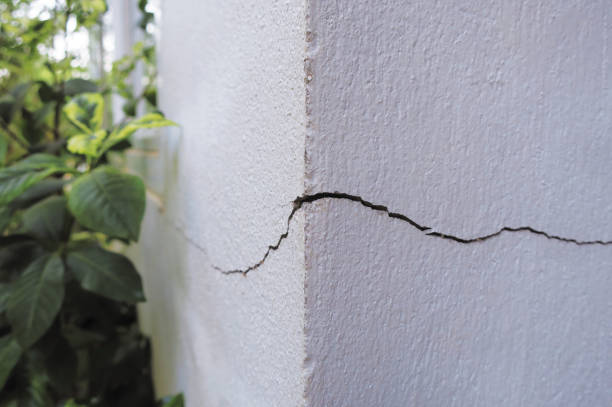
<cite index="420-1">Most of the housing stock in Hurst was built between thirty and sixty years ago.</cite> That means a significant share of the driveways, patios, sidewalks, and flatwork across the city was poured sometime between the mid-1960s and the mid-1990s. In the Dallas-Fort Worth climate — where expansive clay soil never stops moving, summers routinely exceed a hundred degrees, and the occasional winter freeze catches everyone off guard — concrete from that era is showing exactly what you'd expect it to show. Cracks that started as hairlines and have been widening for years. Sections that have heaved near tree roots that were saplings when the slab was poured. Patios that are technically intact but so worn and stained that they've become background noise rather than usable outdoor space.
This isn't a problem unique to Hurst, but it's a problem that's particularly concentrated here because of when the city was built. And it creates an interesting opportunity for homeowners who are ready to address it — because the concrete work you do on a Hurst property today, done correctly, will outlast the next owner after you.
What the Clay Beneath Hurst Is Doing to Your Concrete
Tarrant County clay doesn't care what your house cost. It moves according to its own schedule — expanding when it absorbs moisture after a heavy spring rain, contracting when the summer heat pulls that moisture back out. This cycle repeats multiple times a year in the Mid-Cities, and it's been working on the underside of every concrete slab in Hurst for as long as those slabs have been sitting there.
<cite index="421-1">In Hurst, the original concrete is often thin, under-reinforced, or poured over poorly compacted soil.</cite> Work done decades ago didn't always follow the base preparation standards that quality contractors use today — and in some cases, the concrete was poured to a standard that was simply accepted at the time but that we now know isn't adequate for North Texas soil conditions.
What that means practically: if your Hurst driveway or patio has been cracking for a while, the cracks probably aren't going to stabilize on their own. The same soil movement that caused the initial damage is still happening beneath the slab. Filling a crack without addressing the drainage and base conditions beneath it is a temporary fix at best. The crack comes back, usually wider, usually faster than the first time.
The good news is that proper concrete work in Hurst — with adequate excavation, a compacted gravel base that provides drainage between the clay and the slab, and rebar reinforcement that holds the concrete together when the ground beneath it moves — performs extremely well in these conditions. The difference between concrete that fails in a decade and concrete that holds for thirty-five years is almost entirely a function of what happens before the pour, not during it.
The Specific Concrete Problems Hurst Homeowners Actually Deal With
Rather than walk through an abstract list of concrete services, it's more useful to talk about the specific situations that Hurst homeowners call about most frequently — because they're predictable, and recognizing yours helps you understand what you actually need.
The driveway that's been "fine" for twenty years and suddenly isn't.This one is common in Hurst's established neighborhoods. A driveway poured in the 1980s or early 1990s might go fifteen or twenty years with only surface wear before the accumulated effect of clay soil movement, tree root pressure, and weathering brings it to a tipping point. Suddenly there are cracks you can't ignore, edges that are crumbling, and a section near the garage apron that's started to tilt. This is usually a full replacement situation — the slab has lived its functional life and repair would be throwing money at something that needs to come out.
The patio that's smaller than your life.Hurst was built in an era when a patio meant a modest concrete slab off the back door. A lot of those slabs are still there — structurally fine, but not sized for the way people actually use outdoor space in 2025. The question isn't whether to fix the concrete. The question is whether to expand it. In most cases, the right answer is to remove the original small slab and pour a new, properly sized one — because trying to extend an old slab with a new section creates a joint that will crack differentially in North Texas clay.
The front walkway that's become a liability near the driveway.Tree roots are responsible for more front walkway damage in Hurst's established neighborhoods than any other single cause. The mature oaks and elms that give the older streets their character have spent decades sending roots laterally beneath the concrete, lifting sections and creating the classic uneven-slab trip hazard. When a walkway near a mature tree is replaced in Hurst, root management has to be part of the plan — not just the pour.
The backyard that needs to catch up with everything else.A lot of Hurst homeowners have invested in their homes over the years — updated kitchens, new bathrooms, fresh landscaping — while the backyard concrete stayed the same broom-finish slab from 1988. When the rest of the property has been upgraded, that patio becomes the weakest visual link in an otherwise well-maintained home. This is where a decorative overlay or a full stamped concrete replacement makes real sense — not because the existing concrete is structurally compromised, but because it simply no longer matches the property.
The garage apron that takes abuse and shows it.Garage aprons in Hurst take constant punishment — vehicle weight stopping and starting every day, oil and fluid exposure, the highest foot and tire traffic of any concrete surface on the property. They also tend to be thinner than driveways because they're often treated as a transition rather than a structural surface. In Hurst's older homes, garage apron replacement is one of the most common and most cost-effective concrete upgrades a homeowner can make.
What CBD Concrete Does Differently for Hurst Homeowners
CBD Concrete is a family-owned, owner-operated concrete contractor based in Fort Worth and serving Hurst, the Mid-Cities, and the greater DFW Metroplex. Every project is managed personally by owner Dane — not delegated to a project manager, not handed off to a subcontract crew.
What that means in practice for a Hurst homeowner is straightforward: you deal with one person from the first phone call to the final walkthrough. Dane walks every site personally. He identifies the drainage issues, notes the tree roots, looks at what's happening beneath the surface, and tells you what your concrete actually needs — which is sometimes less than you thought, and sometimes more, but always an honest read on the situation rather than a pitch for the most expensive solution.
The crew that shows up is his crew. Not subcontractors assembled for the job. Not day laborers hired for a specific pour. The same people who have worked together long enough to move through a project with the kind of consistency that only comes from doing it together repeatedly. That consistency is what produces a broom finish that looks uniform across the whole surface, a stamped pattern that aligns correctly from one end of a driveway to the other, and a finished edge that looks intentional rather than rushed.
Every project CBD Concrete pours in Hurst — regardless of size, regardless of neighborhood — starts with proper subgrade preparation. The gravel base goes in. The soil gets compacted. The drainage slope gets established before a single form is set. Rebar goes throughout the slab, supported correctly so it sits where it's supposed to rather than sinking to the bottom of the pour. And in the Texas summer, curing compound goes on immediately after finishing — because concrete that dries too fast in a Hurst afternoon is concrete that starts its life weaker than it should be.
These aren't premium add-ons. They're how the work is done on every project, because they're what separates concrete that lasts from concrete that doesn't.
A Practical Note About Repair vs. Replace in Hurst
Because so much of Hurst's concrete is from an earlier era, the repair versus replacement question comes up on almost every project evaluation. Here's the honest framework for thinking about it in this specific market.
If the damage is cosmetic — surface wear, staining, minor surface cracking on a slab that's level and structurally sound — repair or resurfacing is legitimate. A decorative overlay applied over a properly prepared existing slab in good structural condition can look like new concrete and last another ten to fifteen years with proper sealing. It's a real option, not just a sales pitch.
If the damage is structural — cracks that go through the full depth, sections with vertical displacement between them, heaving caused by roots or soil movement, widespread deterioration — repair is applying a bandage to something that needs surgery. In Hurst specifically, where a lot of the original concrete was poured thin and under-reinforced, structural damage usually means the slab needs to come out. The cost difference between a full replacement and years of recurring patch repairs on a failing slab almost always resolves in favor of replacing it once and doing it right.
The fastest way to know which category your concrete falls into is to have someone walk the site with you and look at it honestly. CBD Concrete does that for free, with no obligation and no pressure toward any particular solution.
The Mid-Cities Advantage: Why CBD Concrete Serves Hurst Well
Hurst sits at the center of the Mid-Cities triangle — positioned between Fort Worth to the west, Dallas to the east, Southlake and Keller to the north, and Arlington to the south. CBD Concrete operates throughout this entire region, which means Hurst isn't a secondary market or a drive-out territory. It's part of the core service area where Dane and his crew work regularly, understand the soil conditions and neighborhood characteristics, and bring the same quality and accountability they deliver on every project regardless of zip code.
For a Hurst homeowner who's practical, values honest communication, and wants concrete work done right the first time by someone who'll still be reachable after the pour — CBD Concrete is built for exactly that.

If you have aging, damaged, or underwhelming concrete on your Hurst property — driveway, patio, walkway, garage apron, or anything else — CBD Concrete will come out, walk the site with you, and tell you honestly what it needs. Free assessment, no pressure, no pitch.
Schedule Your Free Hurst Concrete Assessment → cbdconcrete.com/contact


